
Federal Budget 2026 - Insights by Graeme Colley

Cloudoffis

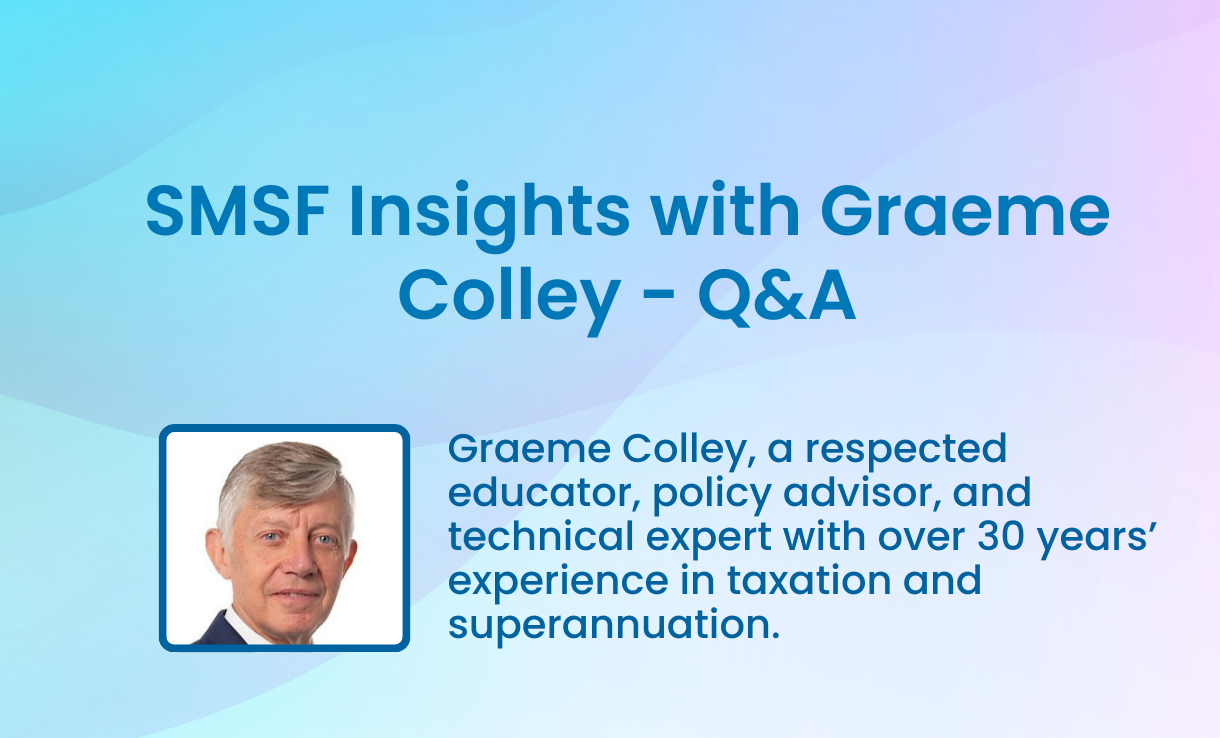
Graeme Colley, a respected educator, policy advisor, and technical expert with over 30 years’ experience in taxation and superannuation, is back with a new blog post covering key questions around Payday Super and how to navigate this upcoming change.

2026 Federal Budget Overview

The 2026-27 Federal Budget had little impact from an SMSF perspective, with the main changes impacting CGT, negative gearing and distributions from discretionary trusts. However, for trustees of SMSFs and their advisers, the main issues are to ensure that the fund is ready for the changes that will take place from 1 July 2026 with the introduction of Payday Super and Division 296.

The main issue with Payday Super is to ensure the SMSF is able to receive employer contributions by 1 July 2026. Confirm that the funds electronic service address (ESA) provider can support the updated SuperStream standards, which will allow the client’s SMSF to keep receiving contributions on time.

The issues with Division 296 are not as urgent as the introduction of Payday Super, as the assessments will be made after the fund has lodged its 2026-27 annual return. However, in the interim, it should be ensured that the fund’s trust deed allows payment of the tax, and the valuation of fund assets and income will be accurate for purposes of the legislation.

Here is a summary of the main Budget announcements.

Changes to capital gains tax arrangements

The current 50% discount for CGT assets held for longer than 12 months will be replaced from 1 July 2027 with cost base indexation and the minimum tax of 30% on the capital gain. The change will apply to all CGT assets, including pre-1985 CGT assets. The new rules will apply to individuals, trusts and partnerships, and they will not apply to superannuation funds, including SMSFs. This means the 1/3rd CGT discount will continue for super fund assets held for longer than 12 months.

Assets that are already owned and are realised after 1 July 2027 will have a time-based apportionment, which will calculate part of the taxable capital gain assessed under the 50% discount rule and part under the new indexation rule.

There are transitional arrangements that continue to allow the 50% discount to capital gains that are realised before 1 July 2027. In a similar way, realised capital gains on pre-1985 assets that occur before 1 July 2027 will continue to remain free of CGT.

Where a person acquires a newly built eligible residential property, they can choose either the 50% discount method or the indexation method when the property is eventually sold.
Income support payment recipients, including Age Pension recipients, will be exempt from the minimum 30% tax. It is assumed that the ordinary income tax rates will apply to the taxable capital gains in these cases.

Example – asset acquired before 12 May 2026 (budget night)

Elizabeth and Patrick purchased a property on 8 June 2021 for $500,000, and they intend to sell it on 28 October 2028. The property has been negatively geared, and the losses continue to be fully grandfathered.

Assume that the property is sold on 28 October 2028 for $1.1 million. The pre-12 May pre-Budget period from 8 June 2021 is 1800 days (2/3rds), and the post-12 post-Budget proportion to 28 October 2028 is 900 days (1/3) inclusive.

The taxable capital gain on a time apportionment basis is:

$1.1 million – $500,000 = $600,000

Pre 12 May pre-Budget period = $600,000 x 2/3 x 50% = $200,000

Post 12 May post Budget period = $180,000 (after reduction for indexed cost base) x 1/3 = $60,000

Negative Gearing
Negative gearing on residential property will change from 1 July 2027. Losses from established residential properties will only be deductible against the rental income or the capital gains from residential properties. Losses will be carried forward and can be offset against residential property income in future years. This will also apply to shares and other geared investments.

However, residential property acquired before 12 May 2026 is fully grandfathered, and losses can be claimed as they always have been. Any newly built eligible residential property that is negatively geared are exempt from the change, and losses can be claimed against other income in the year they are incurred.

Superannuation funds, including SMSFs, are exempt from the negative gearing changes, and therefore, there will be no changes to the current arrangements for limited recourse borrowing arrangements.

Minimum tax on discretionary trusts

From 1 July 2028, trustees of discretionary trusts will be liable for a minimum tax of 30%, and beneficiaries other than corporate beneficiaries will receive a non-refundable credit for the tax paid by the trustee.

Any discretionary trust distributions received by SMSFs are treated as non-arm’s length income and are taxed in the fund at 45%.

The Biggest updates coming for Self Managed Super Funds and Businesses remain as Payday Super and Division 296.

You can find some resources below:

Payday Super – An update from Graeme Colley

Navigating Payday Super with Graeme Colley – On-Demand Webinar

Division 296 – An update from Graeme Colley

If you’d like to speak to one of the Cloudoffis experts, you can reach out here.

Payday Super 2026: What It Means for You and Your Team

Cloudoffis

Graeme Colley, a respected educator, policy advisor, and technical expert with over 30 years’ experience in taxation and superannuation is back with a new blog post covering key questions around Payday Super and how to navigate this upcoming change.

You can also watch his latest webinar covering this upcoming legislation in more detail here.

Background to Payday Super

Payday Super commences on 1 July 2026 and shifts the Superannuation Guarantee (SG) system from quarterly to per-pay-cycle timing of SG contributions.  Employers must ensure SG contributions are made and accepted by super funds in close alignment with each pay event to avoid any SG charge liability. Typical paydays are weekly, fortnightly, or monthly.

Payday Super changes employee super from 1 July this year

The significant changes to Super Guarantee from 1 July 2026 require employers to make super contributions for their employees and other workers as soon as they have been paid their earnings.  The reason for the change is to make sure contributions are made more regularly and to tackle the problems with unpaid compulsory super.

The calculation of Super Guarantee contributions will not change and remain as 12% of a person’s usual salary and wages plus other specified payments.  However,  employers will need to ensure that contributions are received by the super fund no later than 7 working days after the employee’s pay day (Qualifying Earnings day or QE day), whether it occurs weekly, fortnightly, monthly or on some other basis.  Employers will have extra time to make late contributions up to 20 working days after the employee’s pay day for new employees or where an employee has changed super funds.  Longer times to make contributions may be approved by the ATO in extraordinary events, such as fire, flood or other catastrophes.

Calculating the Super Guarantee Charge

The calculation of the Super Guarantee Charge (SGC) will also change from 1 July 2026.  If an employer underpays the employee’s SG contribution, does not make any contribution or the contribution is made to the incorrect fund, SGC may apply.  If the employer discovers the error before the ATO makes an SGC assessment it is possible for employer to make a voluntary disclosure statement (VDS) to the ATO and make a late contribution to the fund.  If the VDS is made prior to the ATO issuing an SGC assessment it may reduce any penalties that may apply.  Where no VDS has been sent by the employer, the ATO will make an SGC assessment based on information provided by the employer via Single Touch Payroll (STP) and the superannuation fund.

The SGC consists of 4 components:

The individual final SG shortfalls for an employee is the amount of SG contributions that are still outstanding at the time the ATO makes the SGC assessment.  The shortfalls take into account the on time and late SG contributions made by the employer.

The employer’s notional earnings components is the amount of general interest charge (GIC) payable on the employee’s SG shortfall which accrues daily.  The employer’s notional earnings stops accruing at the earlier of the day the employer makes any late eligible contributions which reduce the employee’s final SG shortfalls to nil or by the time when the ATO makes an SGC assessment, whichever occurs first.

An administrative uplift amount of 60% applies to an employer’s total individual final SG shortfalls and total individual notional earnings components for a Qualifying Earnings day.  The uplift amount may be reduced including to $nil, for example, where the employer has provided a VDS to the ATO.

The employee’s choice loadings apply where an employer has not complied with the employee’s choice of fund request to which the contributions should be made.  An employer is required to meet the choice of fund requirements for employees, including new employees to avoid a choice loading component being included in the SG shortfall.  The amount of the choice loading is equal to 25% of the value of contributions for any QE day if the employer has not met the employee’s choice of fund.

If an employer has not paid any SGC assessment 28 days after it is due and payable then penalties of 25% – 50% of the outstanding amount apply, depending on the employer’s prior compliance history.

An employer who has contributed too much SG for an employee for a QE day which is not applied may carry forward any unapplied amount for up to 12 months.  The excess can be applied against an  employer’s future individual base SG shortfall for a future QE day.

Making Contributions to the selected super fund

Contributions are usually made by an employer to the employee’s fund using SuperStream. By using SuperStream an employer can provide payments and related data to the fund, including any self-managed super funds, electronically in a standard format.

The current version of SuperStream is being updated before 1 July 2026 so that the new version, version 3External Link, will help to ensure there is:

  • less likelihood of employee’s contributions being rejected by the super fund,
  • clearer error messages if a contribution is rejected by a super fund,
  • faster payment of contributions to the fund,
  • earlier notification to the employer of changes in super fund details.

In conjunction with SuperStream a near real-time payment platform, New Payments Platform (NPP), has been developed to process an employer’s contributions.  The NPP enables an employer’s super contribution to be made through payroll systems or clearing houses and received by an employee’s super fund usually on the same day as the employer makes the payment.  Payments made through some other service providers may still take longer to reach the super fund.

SuperStream also includes a new member verification request (MVR) which allows an employer’s payroll or software solution to verify whether an employee’s super fund details are valid and that the super fund can be accept a contribution before it is made. This can include contributions made to a fund for the first time, where there has been a change in employee information (such as name) or a where a contribution has been previously rejected.  If a match cannot be made the system will provide an error message which will explain the reason for rejection.

For employers who are currently using the Small Business Clearing House it should be remembered that it was closed to new members from 1 July last year and will close permanently on 30 June 2025.  This means that employers are required to use other clearing house arrangements from that time.

Self-Managed Superannuation Funds

Self-managed superannuation funds (SMSF), must comply with all Payday and SuperStream changes.  If an SMSF receives a contribution from an unrelated employer it must ensure that the NPP can link to the fund’s bank account and that the fund has an active electronic service address (ESA).  An ESA is how SuperStream messages are delivered to an SMSF which is usually via an administrator or messaging provider.  Maintaining an active ESA is essential to ensure the employer’s contributions reach the fund in time.

If the employer contributing to an SMSF is a related party relationship, that is, where the employer, SMSF or the SMSF member is a related party there is no requirement to use SuperStream.  However, the related employer may wish to make the employee’s contribution via an electronic funds transfer or other method.  For record keeping purposes, many related party employers may wish to rely on SuperStream and the NPP to keep their payroll affairs more streamlined.

The upgrades to SuperStream allow employers to send an MVR to the SMSF before a contribution is made to the fund.  This confirms the ESA for the SMSF is active before the employer attempts to make the contribution.  If the ESA is not active it could be that the fund is not registered or the ESA is not correctly maintained.  If that’s the case the employer will receive an error message and won’t be able to make a contribution for the employee.

If the employer is unable to make the employee’s contribution to the SMSF the employer may end up with an SGC assessment if it cannot be made within the time required.  It could mean that the employer may redirect contributions to the employee’s stapled super fund or their default fund. It is also possible the employer may also ask them to complete a Superannuation standard choice form so that the contribution goes to the employee’s chosen fund.

  • In addition to the requirements that must be met by the SMSF, it should be ensured that the information provided by the employee is correct so that the employer makes the contributions to the correct fund. The employee should ensure they have provided the employer with the correct ABN, BSB and fund bank account details as well as the fund’s ESA.

ATO Compliance Approach

The ATO has published PCG 2026/1 which focuses on the ATO’s compliance approach to SG shortfalls for each Qualifying Earnings day between 1 July 2026 and 30 June 2027.  It does not intended to  change or reinterpret the legislation, or affect an employer’s obligations under other legislation, awards, or industrial instruments.

The ATO’s approach to audit will depend on whether employers have made a reasonable approach to implement Payday Super.  An employer that is not paying SG for employees or continues to pay SG on a quarterly basis (as under the pre‑2026 rules) and makes no attempt to meet the Payday Super  quarterly will be considered medium or high risk and may be investigated.  The ATO has said that it will prioritise investigations where employers have individual final SG shortfalls greater than nil for one or more employees on a QE day.

The ATO intends to use three risk zones, low, medium and high risk, to guide their compliance activity.  To be included in the Low Risk zone, as an example, if an employer attempts to pay contributions on time but they reach the fund late due to rejection by the fund, the ATO will assess risk based on whether the employer corrects the issue and how quickly the correction is made.  If the employer corrects the issue by making a late payment of contributions will be considered low risk.

To be included in the Medium Risk zone an employer will not meet the Low Risk zone criteria, but all individual final SG shortfalls are nil within 28 days after the end of the quarter in which the QE was paid.

To be included in the High‑risk zone an employer will not meet the Low Risk or Medium Risk criteria or have any individual final SG shortfall greater than nil 28 days after the end of the relevant quarter.

PCG 2026/1 provides a number of examples ranging from low to high risk and how they will be treated for compliance purposes.

After 1 July 2027, the ATO’s compliance settings will apply and PCG 2026/1 will have no further effect.

What Next?

Payday Super is a significant change to the frequency of making contributions for Super Guarantee purposes.  While the calculation of SG contributions does not change employers, fund trustees of small and large fund as well as employees need to check the information in their systems is accurate and that employer contributions will reach the selected superannuation fund in time.  Failure to have up to date systems can mean delays and a possible SGC assessment with increased penalties from the ATO.


If you’d like to speak to one of the Cloudoffis experts, you can reach out here.

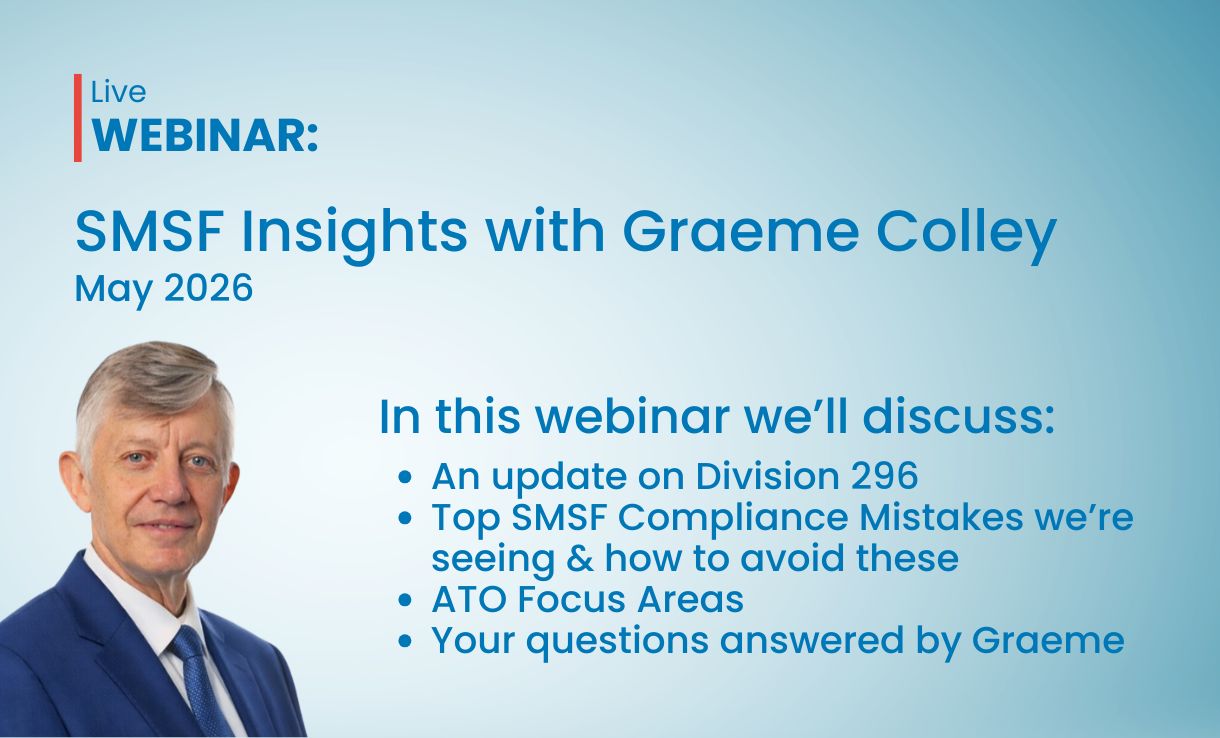
SMSF Insights with Graeme Colley


20 May
12:00 – 12:45 PM AEST


Graeme Colley, a respected educator, policy advisor, and technical expert with over 30 years’ experience in taxation and superannuation, is back for a special webinar where he’ll be sharing his insights on SMSF and answering your burning questions.

Join Cloudoffis and Graeme for this insightful look into SMSF and key trends. You can also register any questions you’d like to ask Graeme.

Webinar Banner

In this webinar we’ll discuss:

  • An update on Division 296
  • Top SMSF Compliance Mistakes we’re seeing & how to avoid these
  • ATO Focus Areas
  • Your questions answered by Graeme


webinar


13 May
12:00 – 12:45 PM AEST


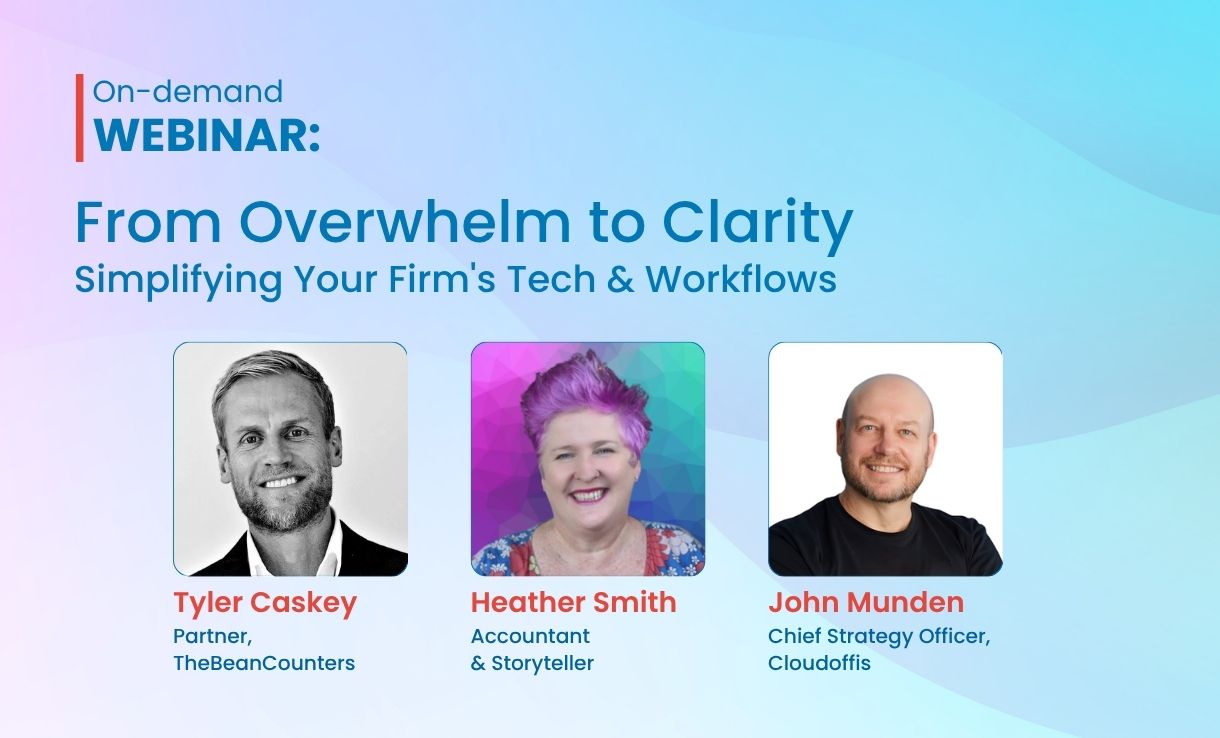
Accounting firms rarely struggle with a lack of technology. Tools are in place, but they’re often underused, duplicated, or disconnected, making it difficult to get everything working together. This panel discussion explores how firms can simplify their tech landscape, improve workflow visibility, and make confident decisions about what to keep, consolidate, or invest in, so you and your team can focus on what matters most: your clients.

Designed for micro to mid-sized Australian accounting firms, this session focuses on cutting through complexity and creating workflows that are consistent, efficient, and fit for purpose.

You’ll leave with greater clarity on your current setup, insight into how others approach workflow design, and practical actions to improve team adoption, unlock capacity, and take back to the office.

You will walk away with:

  • Mindset shift about their tech stack
  • Practical actions to take back to the office which can include, conversation activators, a draft checklist, or an epiphany
  • Conversation starters to align your team on workflow changes
  • Confidence to have 30 minute internal tech stack review


Navigating Payday Super with
Graeme Colley

Graeme Colley, a respected educator, policy advisor, and technical expert with over 30 years’ experience in taxation and superannuation is back for a special webinar where he’ll be focusing on Payday Super and how to navigate this upcoming change.
Join Graeme for this special webinar where we focus on the Payday Super legislation and how this will impact businesses.

Cloud Accounting & SMSF Audit Software: The Latest Updates from Cloudoffis

Cloudoffis


Behind every great accounting practice is software that gets out of the way – and this quarter, we've been focused on making sure Cloudoffis does exactly that.

Welcome to the latest edition of Cloudoffis Pulse, your quarterly look at what's new across Workpapers Sorted, SMSF Auditomaion and SMSF Sorted.

It's been an exciting start to the year, and our product team has been heads-down building the tools you've asked for – from performance improvements that you'll feel every time you log in, to new features designed to take the friction out of your day-to-day workflow.

At Cloudoffis, our mission is to empower the accounting and auditing community with smarter, faster solutions. Everything we build starts with you – your feedback, your challenges, and the way you work. This quarter is no different.

There's a lot to cover, so let's get into it.

What’s happening in

Workpapers Sorted


Tax Sorted becomes Workpapers Sorted
We have updated the product name to Workpapers Sorted! This marks an exciting new chapter in our journey, the decision to rename Tax sorted was simple. We offer an extensive library of workpapers (not just Tax workpapers), and we wanted the name of our product to reflect what the product offers and will do in the future.

Improved Report Generation (Aspose Upgrade)

Workpapers Sorted

Our reporting engine has been upgraded using Aspose, resolving the issues some users previously experienced when generating reports. Report generation is now more stable, faster, and reliable.


Updated Workpaper Formats

Workpapers Sorted

Several workpaper formats have been refreshed and improved to enhance clarity, consistency, and ease of review, helping accountants prepare and review workpapers more efficiently.


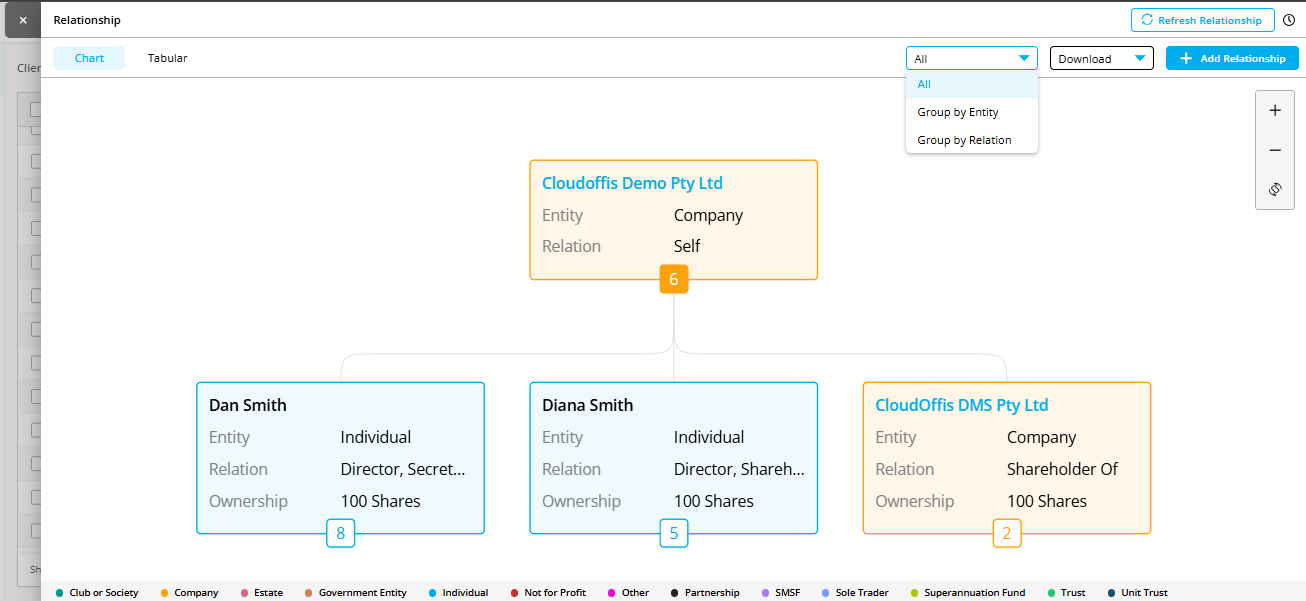
Enhanced Relationship Chart

Workpapers Sorted


We’ve enhanced the much loved relationship chart, with new interactive capabilities and the ability to download the chart in different formats and views we know our users will love.

View client structures more clearly with interactive vertical and horizontal views — and download the relationship chart when you need it for reviews or client discussions.

Smarter & More Flexible Job Report Package Generation

Workpapers Sorted


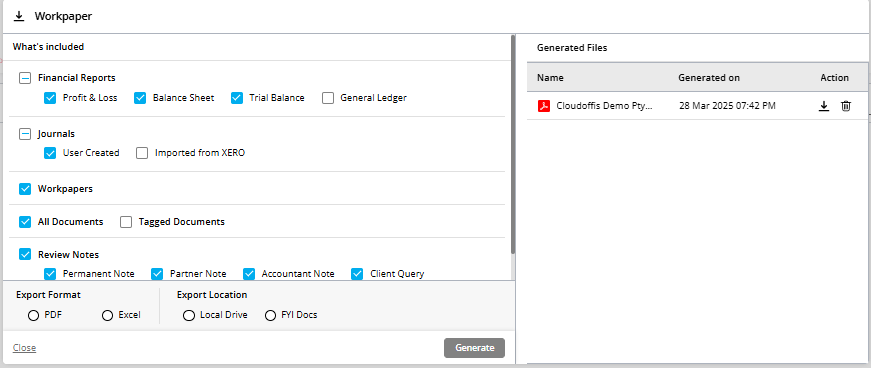
Job Report Package generation has received a major upgrade, giving users greater flexibility and control:

  • Clear visibility into the Job Report Package generation process
  • Easy access to previously generated Job Report Packages
  • Ability to generate Job Report Packages in both PDF and Excel formats
  • Flexible options to save Job Report Packages to the Local Drive or directly into the FYI Portal
  • Improved control over regenerating Job Report Packages when required

Upcoming Release – 24 March 2026

Our upcoming release will introduce the following enhancements:

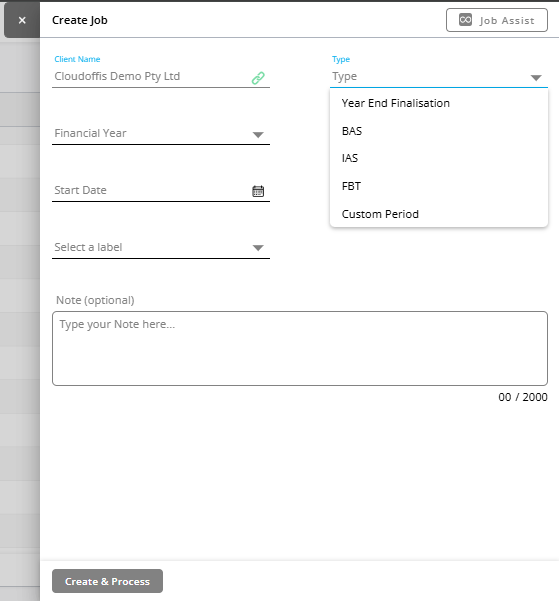
  • BAS, IAS, and FBT Job Types – Accountants will be able to manage additional compliance work directly within Workpapers Sorted, keeping more work in one platform.
  • Save Filter & Personalised Views – Users will be able to apply filters on the client screen and customise column views within jobs. The system will remember these preferences automatically and save them for future use unless the user chooses to reset them.


What’s happening in

Workpapers Sorted


Optimised User Experience

Our team has been hard at work behind the scenes on SMSF Auditomation, making substantial improvements to the performance and efficiency of our servers and software. While these changes may not always be visible on the surface, the impact is something you'll feel every time you use the platform. Think faster load times, smoother navigation, and a more reliable experience from start to finish.

We're committed to continuously refining the foundation of SMSF Auditomation so that the tools you rely on every day work harder for you.

Also in case you missed our amazing new customer story – Read about Super Green Tick and how they grew their practice by 50% using SMSF Auditomation.

Read their story


What’s new in

Workpapers Sorted


The value of SMSF Sorted was almost immediate. It was a no-brainer for the team.

Improved Document Upload Experience in Sorted Lite

Workpapers Sorted


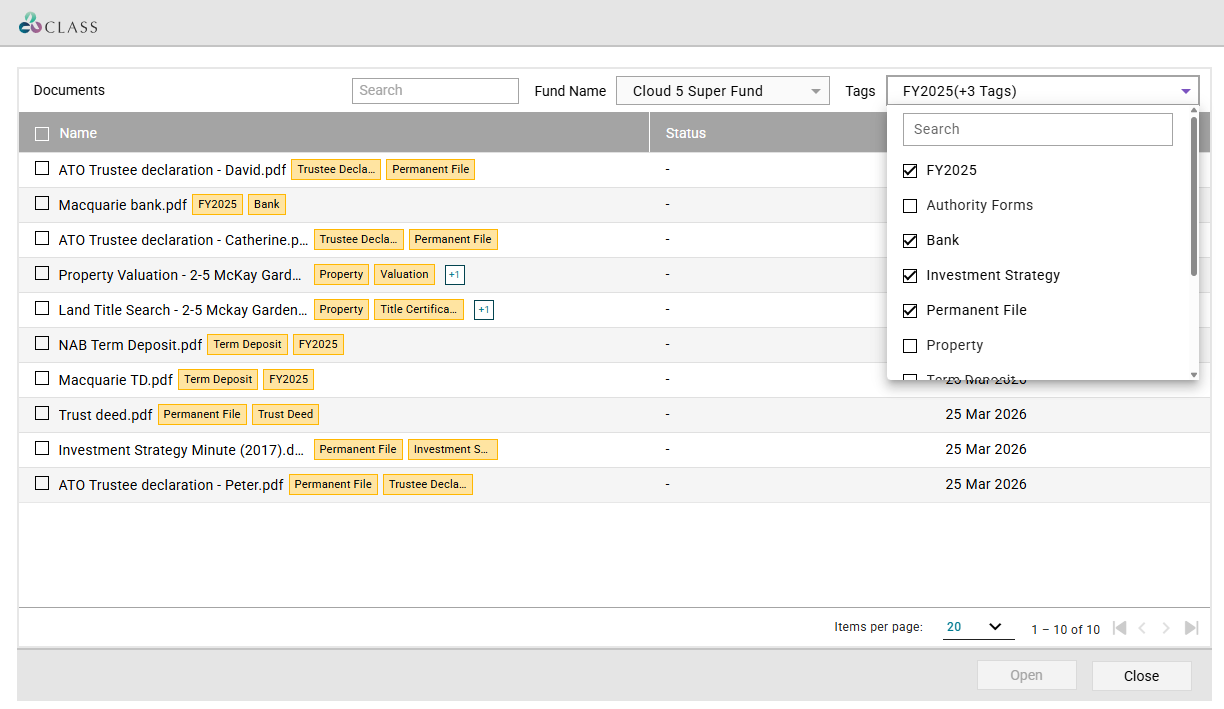
Uploading documents from Class DMS just got more powerful. Users can now easily filter documents using tags created in Class DMS, making it quicker and simpler to find exactly what they need. This enhancement brings greater flexibility and control to Sorted Lite, helping streamline your document management experience.

Click here for more information.

If you’re using Sorted Lite, or haven’t tried our products yet, discover how this firm went from manual Workpapers to Cloud Automation


Read their story


Are you to grow with Cloudoffis?

Whether your practice specialises in auditing or offers a full suite of accounting and advisory services, Cloudoffis has you covered with streamlined workpapers and workflows. Cloudoffis is here to help keep your practice running smoothly.

– Quick Setup – Get started in minutes

– Flexible Platform – Work the way you want with adaptable features and integrations

– AI, Cloud-Based Technology – Delivering efficiencies and compliance at scale

– Flexible Pricing & Unlimited Users – No lock in contracts

– Free Onboarding & Ongoing Training – Onboard your team effortlessly with expert guidance and continuous support at no extra cost

– Tailored Solutions – Our agile team adapts to your unique business needs to ensure your success


Built with Accountants, for Accountants

Purpose-built tools shaped by real feedback from firms like yours—no unnecessary extras, no one-size-fits-all templates. Just what your team actually needs to standardise processes, operationalise efficiency, and feel supported every step of the way.

Where Support Flows

Cloudoffis

From Manual Workpapers to Cloud Automation: How ERY Modernised 20 Years of Practice

Cloudoffis

Summary

The Business: ERY. It is a Sydney based firm of dedicated professionals who provide a complete range of public accounting and taxation services to individuals, SMSF’s and businesses.

Products: SMSF Sorted & Workpapers Sorted

Industry: Accounting & SMSF

Role Interviewed: Larry Reisen, Partner

Cloudoffis Customer: 1 Year

Key Results:

  • Significant reduction in auditor queries using SMSF Sorted
  • Seamless setup with minimal effort from the team
  • Instant visibility and improved internal communication
  • Strong trust in the Cloudoffis team and product development

Background:

After more than 20 years in practice, the owners of ERY, a boutique accounting firm undertook a strategic modernization program following their transition to joint ownership three years ago. Their goal was to move toward best-practice systems, reduce inefficiencies, and future-proof the business through cloud-based technology.

In July 2025, the firm adopted SMSF Sorted and Workpapers Sorted as part of this transformation. While SMSF Sorted delivered immediate efficiency gains—particularly through streamlined auditor collaboration and reduced query volume – Workpapers Sorted represents a larger operational shift that is expected to be fully integrated over a 12-month period.

The Challenge: Legacy Processes

ERY has a strong client base in accounting and SMSF services. Approximately three years ago, the current two partners took ownership and initiated a strategic review of operations. Their vision was clear: modernize the firm, simplify workflows, and move toward best practice, without overcomplicating life for their small team.

A Turning Point: Rethinking Systems

Modernisation began with a broad reassessment of the firm’s technology stack. The partners transitioned to Xero for practice management, allowing them to work primarily within a browser-based environment. That shift alone reduced friction and aligned the firm with the cloud-first direction.

At the same time, they began searching for better solutions for workpapers and SMSF processing. For years, SMSF jobs had been completed entirely in Excel. Once finished, files were converted to PDFs and sent to the auditor. Queries would come back via email, and tracking them relied largely on memory, inbox management, and informal follow-up.

The process worked—but it was reactive and inefficient.

Larry had prior exposure to SMSF Auditomation and was familiar with the broader ecosystem developed by Cloudoffis. Seven or eight months before implementation, he revisited their products and saw something different.

SMSF Sorted has matured significantly since its early release. It now offers structured SMSF workflows that fit naturally into their processes. At the same time, Workpapers Sorted presented what Larry described as a “happy medium”—providing ready-made checklists and templates without demanding heavy customization or administrative burden. That balance was critical.

“As a small firm, they needed something that worked off the shelf.”

Immediate Impact: SMSF Sorted Changes the Dynamic

The value of SMSF Sorted was almost immediate. It was a no-brainer for the team.

“We saw value from SMSF Sorted almost immediately.”

Around the same time, the firm had changed auditors. Their new auditor also used Cloudoffis for SMSF Auditomation. With full adoption of SMSF Sorted, the process became structured and intentional.

“Moving to a new auditor was a turning point — and having systems that aligned made all the difference.”

Instead of uploading a collection of PDFs and hoping the auditor could make sense of them, documents were now provided correctly referenced within a defined workflow. The most noticeable outcome was the reduction in auditor queries. What had once been a back-and-forth cycle became a streamlined, collaborative process.

ERY’s internal workflow was also streamlined. Queries could now be raised against specific line items, easily tracked, and marked as completed. Anyone in the team could open a file and immediately understand what remained outstanding.

For ERY, this confirmed they had made the right decision in investing in Cloudoffis.

A Bigger Shift: Embedding workpapers

If SMSF Sorted delivered quick wins, Workpapers Sorted represents a deeper transformation.

Unlike SMSF Sorted — which largely enhances existing processes – Workpapers Sorted changes how the firm structures and documents its engagements. At the same time as implementing Workpapers Sorted, the firm was also onboarding with Xero. The combined change required patience.

ERY knew they needed a solution, but the challenge was finding the right one. While many options in market, the issue was that many were quite rigid or required a lot of implementation.

“It’s a happy medium — structured enough to guide us, flexible enough to adapt to our needs. It didn’t require a lot of input for us to set it up”

The partners are realistic about the timeline. While they are only in the early stages of using Workpapers Sorted, the partners are confident in their choice. They already see its potential.

One feature they value highly is the ability to roll forward notes into new workpapers. In a profession where many engagements are similar year to year, this eliminates the need to reopen prior files and reconstruct documentation from scratch. Over time, that alone is expected to generate significant efficiency gains.

The firm has not yet fully customised its templates and checklists, largely due to competing priorities but is impressed by what they can do. The Cloudoffis team has offered support in embedding merge fields and assisting with setup when the firm is ready which is why ERY see Cloudoffis as their one stop solution for accounting tech.


Building Trust Through Partnership

What stands out most in this case is not just the software, but the relationship. Larry found their experience with Cloudoffis to be exceptionally accessible.

“You don’t often get two hours with the head of product and a developer talking through your real workflow problems. That was really impressive for having trust in the company – that there is this mission to continue to improve”

● Support is quick

● Feedback is heard

● Product leaders are reachable

In one instance, the Director of Product Development for Workpapers Sorted spent two hours discussing the firm’s workflow challenges and potential improvements. Larry also met the founders of Cloudoffis, Viral and Manish and was struck by their passion for building a great product.

This responsiveness has created a high level of trust.

They are confident that the workpaper process will eventually reach peak efficiency within the firm, even though it is still in an evolving state. That confidence is rooted in the fact that Cloudoffis has a track record of innovation and willingness to adapt based on client input. Cloudoffis builds with their customers.

“They actually listen — and you can see the innovation happening.”

The Next Phase: Integration and Unification

As accounting technology continually evolves, modernisation remains a constant, ongoing process.

Their broader ambition is to eliminate silos across their technology stack, which includes Xero, Class, NowInfinity, ATO Mate, Cloudoffis products, and SuiteFiles. Data duplication and fragmented workflows remain challenges they want to solve.

Looking Ahead

A few years into ownership, Larry has moved decisively towards a modern, browser-based practice. SMSF Sorted has already reshaped their SMSF workflow and auditor collaboration. Workpapers Sorted is still evolving, but its long-term value is clear.

Their journey reflects a broader truth for small firms: modernisation is not a single event, but a staged evolution. Quick wins build momentum. Larger transformations require patience. And perhaps most importantly, the right technology partner makes the process sustainable.

What sets Cloudoffis Apart?

Cloudoffis makes preparation, approvals and compliance easy with AI-powered workpapers. As Australia’s leading SaaS provider in the SMSF industry, we bring over 10 years of unparalleled experience.

Pioneers in our field, we take pride in supporting the accounting and auditing community to streamline their workflows and work more efficiently through SMSF Sorted, SMSF Auditomation and Workpapers Sorted.

If you’re a firm looking to automate your SMSF audit process today, you can learn more about SMSF Sorted or Workpapers Sorted here.

You can book a demo with a Cloudoffis expert here.


Cloudoffis Audit Automation

Cloudoffis launches
Workpapers Sorted, unveiling expanded AI-powered functionality

Sydney, 12 March 2026:

Cloudoffis, Australia’s leading cloud-based technology provider for accounting and SMSF advisory firms, has today officially launched Workpapers Sorted, an evolution of its flagship workpapers platform formerly known as Tax Sorted, bringing the product’s scope, capability and AI-driven innovation to new markets.

This evolution reflects the platform’s expansion beyond tax-specific workflows into a comprehensive, AI-powered workpapers solution designed to standardise processes, improve compliance and streamline accounting and advisory operations.

Originally introduced to address inefficiencies in tax workpapers, the platform has rapidly evolved into a broader ecosystem that integrates deeply with Xero, Microsoft Excel, FYI, DocuSign and the ATO to support firms across a wide range of accounting and compliance workflows.

John Munden, Chief Strategy Officer at Cloudoffis, said the launch represents the next chapter in the company’s product strategy.

“When we first brought Tax Sorted to market, our focus was solving inefficiencies in tax workpapers. Since then, the platform has evolved well beyond that initial use case,” Munden said.”

“Workpapers Sorted reflects the reality of what the product delivers today – an AI-powered workpapers ecosystem that integrates multiple data sources, automates manual processes and gives firms greater visibility across entities and group structures.”

“This isn’t simply a name change – it’s an evolution of where we envision the product going. It signals the innovation happening within the platform and our ambition to support practices with smarter, more connected workflows.”

The launch of Workpapers Sorted coincides with a series of major product enhancements that underscore Cloudoffis’ continued investment in innovation.

Recent updates include:

  • Client Tax History at a Glance – a new “Lodged as per ATO” column within Job Financial Reports, displaying four years of lodged income tax return data in a single view to support more accurate preparation and review.
  • Improved FYI document upload experience – enhanced file-type visibility within the FYI document screen, making it easier for teams to identify and upload the correct supporting documentation.
  • Enhanced workpapers library – improvements to calculation reliability and the addition of new templates including Accounts Receivable, Accounts Payable and Depreciation Schedule (as per accounts).

Further innovations rolling out in the coming months include:

  • A redesigned PDF workpaper package format focused on readability and review efficiency during finalisation.
  • An Excel-style file viewer within the document section, allowing spreadsheets to open in their native format rather than converting to PDF.
  • Continued enhancements to workflow automation and reporting modules.

Workpapers Sorted uses AI to automate data ingestion from supporting documents, Xero files and ATO information, reducing manual entry and improving accuracy. Users can refresh client data with a click, generate real-time trial balance, balance sheet, profit and loss and general ledger reports, and post journals back to client files directly within the platform.

Existing customers will experience no disruption to service, pricing or integrations. Login credentials and current integrations remain unchanged, with the updated name and branding now live across the product, website, support documentation and partner marketplaces.

“The firms that shaped this product were with us from the beginning. They came on the journey, gave us feedback, and we built it. Most of our clients have been with us for more than four years, and harnessing those relationships is how Workpapers Sorted was made – and it’s how we’ll keep developing it.

“There are other solutions in the market that aim to remove humans from the process entirely. That’s not what we’re about. We’re focused on being a human business – one where AI accelerates the work, but the judgement, the relationships and the expertise always stay with the people,” Munden said.

“Our priority has been ensuring a seamless transition, and Cloudoffis will continue to provide the same support and innovative technology our customers rely on. Firms can continue using the platform exactly as they do today – with the added benefit of ongoing feature releases designed to standardise workflows, strengthen compliance and improve efficiency across their practice.”

The launch of Workpapers Sorted reinforces Cloudoffis’ commitment to delivering practical, AI-driven solutions that help accounting and advisory firms focus on higher-value client work.

For more information, please visit: https://cloudoffis.com.au.

ENDS

About Cloudoffis

Cloudoffis is a cloud-based technology provider for accounting and advisory firms in Australia, delivering AI-powered workpapers and workflow solutions that improve standardisation, efficiency and compliance. By integrating with leading platforms including Xero, Microsoft Excel, FYI and the ATO, Cloudoffis helps practices eliminate manual processes and focus on higher-value client work.

For further information or to arrange interviews, please contact:
Jasmine Turvey – Reverb Media
E: jasmine@reverb-media.com.au
P: 0437 620 320

How Super Green Tick grew 50% using SMSF Auditomation by Cloudoffis

How Super Green Tick grew 50% using SMSF Auditomation by Cloudoffis

Summary

The Business: Super Green Tick

Product: SMSF Auditomation

Industry: SMSF Auditing

Role Interviewed: Peter Gallagher, Director

Cloudoffis Customer: 7 Years

Key Result: 50% business growth with no increase in staff


Super Green Tick is a specialist SMSF auditing firm dedicated to providing high-quality, professional SMSF audit services to accounting firms and SMSF administrators.

The Challenge: Scaling an Audit firm without adding complexity

As a specialist SMSF audit firm, Super Green Tick’s success depends on efficiency, consistency, and confidence in their processes. Director Peter Gallagher, with a background spanning Big Four auditing and finance director roles, was focused on one thing: building a scalable audit operation.

Before adopting Cloudoffis, the firm relied on largely manual processes. In 2015, Gallagher introduced a cloud-based workpaper solution to move away from paper files, but it came
with limitations.

“Approximately half of our audits still required manual work because the software only worked with certain platforms.”

Managing multiple processes depending on the client’s software stack created inefficiencies in training, reporting, and quality control — all barriers to growth.


Searching for a better way

After using their existing software for 2 years, it became clear that the platform was not delivering any efficiency. Peter was back in the market for a new solution, unfortunately there were not many SMSF Audit software options available – only 2 to 3 in the market. Then, Cloudoffis reached out to Peter to showcase SMSF Auditomation.

After seeing a demonstration and speaking with the team, Super Green Tick saw a lot of potential and personally loved Cloudoffis’s commitment to investing in growing the product and working with customers to ensure we meet their requirements.

Cloudoffis offered everything their current solution provided – but added automation and observation reporting, which fundamentally changed how audits were performed for the business.

“It gave us all the functionality we already had, plus automation that actually made a difference.”

Implementation of SMSF Auditomation was a seamless experience for their team, Peter highlighted that it was a simple process and the team were up and running quickly. It felt intuitive, much like an iphone. It just makes sense.

“By digitising you reduce paper, you can find things easier due to search functionality etc and you just don’t need to be scared of it – Cloudoffis is like using an Apple iphone, it’s pretty intuitive – not all products are but Cloudoffis is.”


The Solution: One Platform, One Consistent Process

Super Green Tick transitioned fully to Cloudoffis within two years, ultimately deciding to run 100% of their audits through a single, consistent workflow, even when some clients weren’t yet fully automated. This is when they saw a huge impact on their business.

“Having multiple processes just wasn’t efficient — for staff training, reporting, or quality control. We wanted one way of doing things.”

As their client base increasingly adopted BGL 360, automation accelerated. What was once a 60/40 split between automated and traditional audits is now closer to 90% automated.

Some of the features that really drove impact for Super Green Tick were observation reporting, automated workflows, and the reporting templates which only got better over time as Cloudoffis evolved the product. Peter describes this evolution as the “beginnings of AI,” laying the groundwork for even greater efficiency.

SMSF Auditomation’s reporting automation proved especially valuable, automatically selecting appropriate report types and managing common audit issues.

Audit


The impact: Growth without the headaches

The impact on productivity was clear and measurable. Super Green Tick were able to grow the firm without having to invest in additional headcount.

Results achieved using SMSF Auditomation:

  • 50% business growth with the same staffing level
  • Significant reduction in audit time through exception-based reviews
  • Increased confidence in audit quality and consistency
  • Improved staff collaboration through a single, clear process

Since implementing Cloudoffis, Super Green Tick has seen their audit turnaround time drastically reduced from 3-5 days to a consistent 1.5 days. This improvement has led to a better client experience, with Super Green Tick receiving positive feedback that their turnaround times are now well above client expectations.

‘’Communication with clients has also improved because we have reduced email interaction and there by ensure all issues are captured and reviewed prior to sign off.’’

Another meaningful impact is that using Cloudoffis has also strengthened regulatory confidence for the firm. In 2025, they were audited by the ATO – this can be a stressful procedure for many firms. However, with Cloudoffis on their side – this was not the case.

“When the ATO audited us and we mentioned Cloudoffis, there were no further questions about our software. They were comfortable with the process and moved on.”


Advice for Firms Digitising Their Audit Process

For firms considering digitisation, Gallagher offers clear guidance:

  1. Implement the full workflow from day one — and make the business fit the software. You will get the benefits much sooner this way.
  2. Tailor your audit program templates to your specific risk profile. Take the time to invest in the comments.
  3. Prepare templates for common issues and reports to save time in the back end.

“Observation reporting alone changes everything. You stop sifting through documents and start focusing on what actually matters.”

If you’re a firm looking to automate your SMSF audit process today, you can learn more about SMSF Auditomation here.

You can book a demo with a Cloudoffis expert here.

Audit

SMSF Insights with Graeme Colley - A Q&A

Read the latest Q&A with Graeme Colley, a respected educator, policy advisor, and technical expert with over 30 years’ experience in taxation and superannuation.

Is the average of SMSF members/trustees increasing?

Based on the information compiled by the ATO from SMSF Annual Returns, there is a slight variation in the age of members/trustees at the time the SMSF is established. The latest statistics compiled from the 2019-20 to 2023-24 SMSF Annual Returns show that the median and average member age in the year an SMSF is established is between ages 46 and 47. However, the average and median age of all members is around age 62.

There appears to be a decrease in the proportion of individuals establishing SMSFs who are aged under 35 and between 55 and 59. There is an increase in the proportion of individuals establishing funds who are aged between 35 and 54.

Age ranges of SMSF members as at 30 June 2025

The following table, published by the ATO and based on data compiled by the
Australian Business Register, shows:

  • The approximate age distribution of SMSF members at 30 June 2025
  • The age distribution of members of SMSFs established in each income year from 2019-20 to 2023-24

The main points of the data are:

  • As at 30 June 2024, both the average age and the median age for all SMSF members were 62 years
  • The median age of SMSF members of newly established funds in 2023-24 was 46 years
Age distribution of all SMSF members at June 2024, and members by the establishment year of the SMSF

Age Distribution of All SMSF Members at June 2024, and Members by Establishment Year of the SMSF

Age Range All Members 2024-25 2023-24 2022-23 2021-22 2020-21 2019-20
< 25 0.6% 1.2% 1.4% 1.4% 1.4% 1.7%
25 – 34 2.7% 8.5% 8.2% 9.9% 9.9% 12.2%
35 – 44 12.2% 35.6% 33.4% 35.0% 34.1% 32.8%
45 – 49 9.5% 18.1% 17.6% 17.7% 18.5% 17.7%
50 – 54 11.9% 15.9% 16.6% 15.6% 15.6% 14.8%
55 – 59 12.3% 10.8% 11.8% 10.8% 11.2% 11.1%
60 – 64 12.6% 6.0% 6.5% 5.8% 5.8% 5.8%
65 – 69 11.5% 2.6% 2.9% 2.5% 2.3% 2.5%
70 – 74 10.0% 1.0% 1.2% 0.9% 0.8% 1.0%
75 – 84 13.7% 0.4% 0.5% 0.4% 0.3% 0.4%
85+ 3.0% <0.1% <0.1% <0.1% <0.1% <0.1%
Total 100% 100% 100% 100% 100% 100%
Average member age 62.0 47.0 47.4 46.5 46.6 46.2
Median member age 62.4 46.2 47.0 46.0 46.2 46.0

Source: ATO SMSF Annual Overview 2023-24 Self Managed Superannuation Funds
Updated 17/12/2025

Members of SMSFs as at the end of June 2025

The following table contains the age distribution of individuals who were members of SMSFs as at the end of June 2025 and is based on Australian Business Register (ABR) data.

Table 6: Members, by Gender and Age Range
Age ranges Male Female Total
< 25 0.6% 0.6% 0.6%
25–34 2.7% 2.8% 2.7%
35–44 11.8% 12.7% 12.2%
45–49 9.5% 9.5% 9.5%
50–54 11.7% 12.1% 11.9%
55–59 12.1% 12.5% 12.3%
60–64 12.5% 12.7% 12.6%
65–69 11.4% 11.6% 11.5%
70–74 10.0% 10.1% 10.0%
75–84 14.3% 13.0% 13.7%
85+ 3.5% 2.4% 3.0%
Total 100% 100% 100%
All ages 52.7% 47.3% 100%

Source: ATO SMSF Quarterly Statistical Report – September 2025
Self Managed Superannuation Funds – Updated 17/12/2025

If the fund owns real estate, is the auditor required to obtain a title search each year indicating its ownership and whether it is encumbered. Is there an alternative?

Both the ATO and the Administrative Review Tribunal consider it is necessary that a title search be undertaken each year to satisfy the requirements of the Superannuation Industry Supervision Act (SIS Act). The search is required to establish that the trustees have met the requirements of section 65 of the SIS Act and regulations 4.09A and 13.14 of the SIS regulations.

The reason for requiring the title search each year are:

Section 65: loans or financial assistance to members

To check whether the fund has met the requirements of section 65, the auditor
must be satisfied that the fund has not lent money or provided financial
assistance to members and relatives. This requires the auditor to:

  • Examine bank statements and obtain explanations from trustees about any
    unusual transactions, including transfers of money to members or relatives
  • Check details of all loans by the fund, including the parties to the loan,
    loan term, interest and repayments
  • Check any transactions with related parties to determine whether members
    or relatives have received financial assistance
  • Review the ownership of fund assets to ensure the investment is owned by
    the fund and that no charge or other form of security has been taken over
    any of the SMSF’s assets to secure a member’s or relative’s personal borrowing

Whether the fund’s assets have been used to secure borrowing can only be
determined by a title search or other independent verification.

Regulation 4.09A: separation of assets

To determine whether the fund’s money and assets are held separately from money and assets held personally by the trustees or a standard employer-sponsor the auditor should:

  • sight asset ownership documents, including bank statements, to verify SMSF assets are held in the name of trustees on behalf of the fund (for example, R & J Smith as trustees for the Smith SMSF or R Smith Pty Ltd as trustee for the Smith SMSF)
  • scheck for alternative documentation that protects the fund’s assets (for example, a valid declaration of trust or title documents) where State law prevents ownership in the name of the SMSF
  • sreview transactions on bank statements to ensure fund money is not mixed with money belonging to related parties of the SMSF.
Regulation 13.14: charges over assets

The auditor needs to check that the fund has complied with regulation 13.14 to confirm that the trustees have not given a charge over or in relation to a fund asset by obtaining:

  • written representations from the trustees
  • annual property title searches for real properties
  • searches of the Personal Property Securities Register External Link for interests registered by other parties against SMSF assets.

Where there has been a change in trustees, the auditor should obtain evidence that the ownership of asset documents reflect the change.

An update on Court and Tribunal Decisions

Reviews by regulators and the courts in recent years show that proper documentation is essential. One case is the Administrative Review Tribunal decision in Murphy v ASIC [2025] ARTA 75 (6 February 2025).

In the case, the ATO reviewed the audit files of Mr Murphy which were referred to ASIC because of various auditing and independence breaches. One of the fund’s audited showed

● no evidence of the ownership of a property in Victoria as no title search was undertaken for for the relevant year(s),

● failed to determine whether a borrowing complied with s67 of the SIS Act – trustees were concerned about compliance, and

● deficiencies in the audit engagement letter issued by Mr Murphy for the audit which resulted in the trustees being concerned about compliance.

The Tribunal confirmed the ASIC decision to disqualify Mr Murphy’s registration as an SMSF auditor.

Given the rules surrounding non-arm’s length income (NALI) , if someone processes their own SMSF by using the firm’s software which is not material to the firm, what are the consequences?

The answer to this question can be found in the finalised version of Law Companion Ruling LCR 2021/2 which was published in September 2025. The ruling clarifies how the non-arm’s length provisions of the tax law work for non-arm’s length expenditure incurred by an SMSF.

Example 2 at paragraphs 24 to 26 of the ruling is about Mikasa who is a trustee of her SMSF and a partner in an accounting firm. She engages her firm to provide accounting services for the SMSF which include administration services for the fund. The firm does not charge for the services it provides and as a result they are considered to be non-arm’s length dealings between the firm and the fund trustee. In view of this the ATO’s opinion is that a penalty applies to the non-arm’s length income for purposes of section 295-550 of the SIS Act. The penalty is equal to twice the difference between the amount of the expense that might have been incurred has the parties been dealing at arm’s length and the amount of the expense incurred by the fund.

There is an exception to this in Paragraph 51 of the ruling where a staff discount policy applies and the fund is entitled to a discount which is provided to all employees, partners, shareholders or office holders and it is consistent with normal commercial practices.

With an increase in the number of SMSF auditors being disqualified, what should I do? How can technology help me?

This question is not easy to answer as we do not know about your situation. However, provided you are meeting the ATO’s compliance audit requirements and the professional audit standards then you should not have any issues to be concerned with. You may like to contact your professional association to see whether they have a review service which can let you know whether you meet the relevant audit requirements.

It’s important to look at your overall audit process and where you can create more efficiencies and avoid any compliance issues. There are many platforms that allow you to streamline this process. SMSF Auditomation, by Cloudoffis allows you to streamline your process and ensure you are audit ready.

If you’d like to speak to one of the Cloudoffis experts, you can reach out here.